

How To Come Up With A Background For A Drawing
When learning to draw with graphite pencil, knowing the fundamentals is cardinal. Below, Lee Hammond shares expert insight into the basics, excerpted from her book, Lee Hammond's All New Large Book of Drawing .
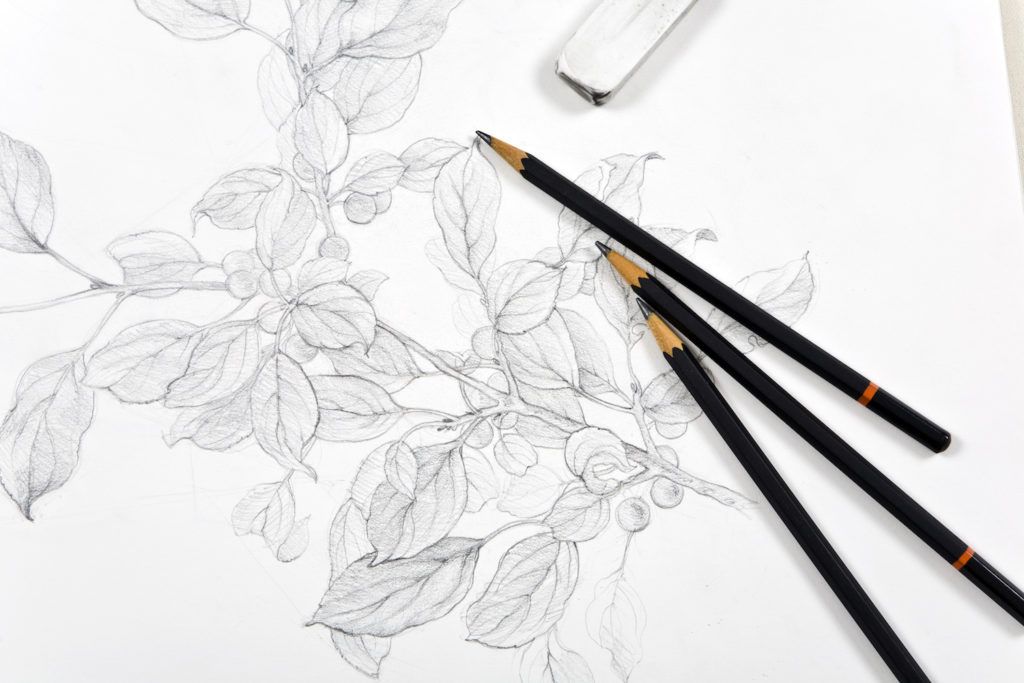
Working with Graphite Pencil
Graphite has always been my get-to medium for fine art. It was my offset honey when I started learning bones cartoon techniques. Because I am cocky-taught, it was the easiest medium to chief. It's also the nigh portable and clean medium, then it was convenient when I was raising my children.
In the 80s, I developed the "Lee Hammond Blended Pencil Technique" and started pedagogy information technology to pocket-size groups. Like me, the students constitute graphite to be the easiest medium to control. By the 90s I was hooked — and writing books about information technology. This technique has changed the manner people draw.
My book will brand you proficient in graphite cartoon. Even if y'all have previous experience, the projects will give you boosted skill and understanding. I promise the illustrations will inspire you and evidence that graphite pencil is not simply a tool to be used for preliminary sketching, but is a fine-art medium in its ain right.
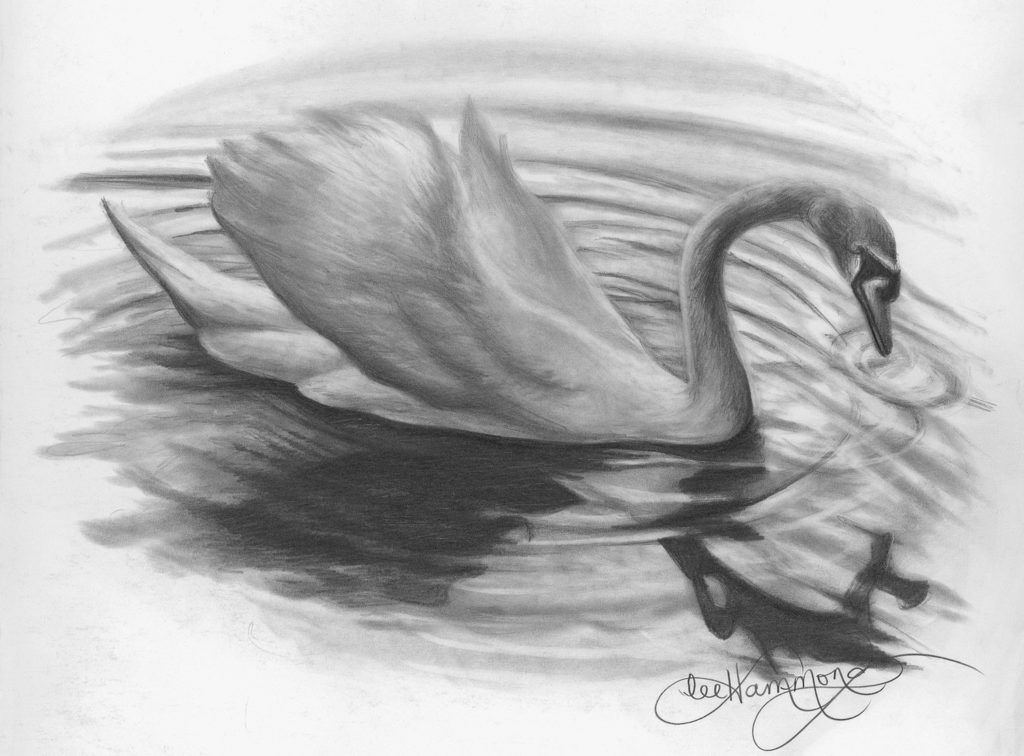
Graphite Tools
Yous cannot create quality artwork with inadequate art materials. My blended pencil technique requires the right tools to create the await. Don't scrimp in this department or your fine art volition suffer.
I've seen many of my students blame themselves for beingness untalented when it was their supplies keeping them from doing a practiced chore. The following tools will aid yous be a better artist.
Pencils
Mechanical pencils are corking for fine lines and details, and you never have to acuminate them. While a mechanical pencil is my pencil of choice, the pb is the nigh important part. 2B is a soft lead that offers a smoothen blend. You tin can also use 4B or 6B with similar results.
Smooth Bristol Board or Newspaper (Two-Ply or Heavier)
I similar a paper that is very smoothen (plate cease) and can withstand a good deal of rubbing, scratching and erasing.
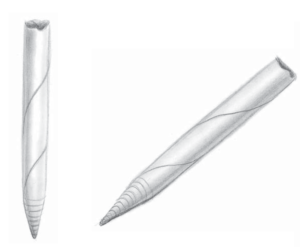
Blending Tortillions and Stumps
Both are used for blending the graphite pencil. Tortillions are spiralwound pieces of paper that are good for modest areas. Stumps are paper pressed and formed into the shape of a pencil. They are pointed on both ends and work well for blending big areas.
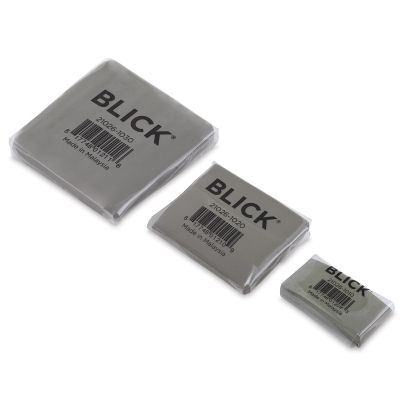
Kneaded Erasers
These erasers resemble modeling dirt and are essential to a blended pencil drawing. They gently lift highlights without ruining the surface of the newspaper.
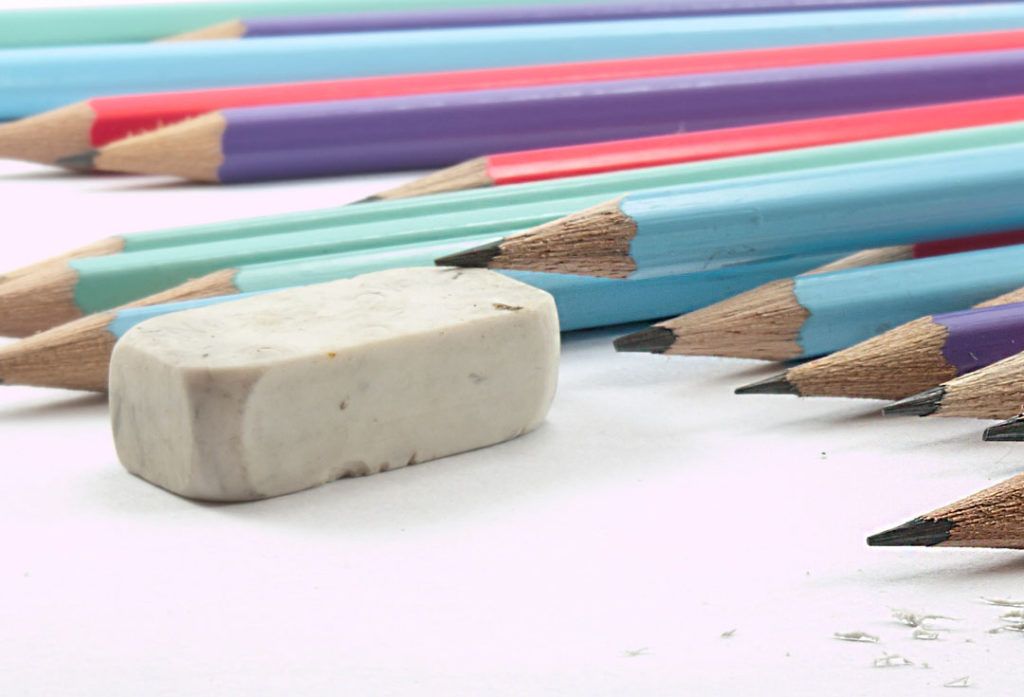
Stick Erasers
These erasers resemble mechanical pencils with a click mechanism for advancing them. The erasers in these are fabricated of vinyl, and they erase pencil marks cleanly. The pocket-size bespeak of the vinyl eraser can remove precise lines and details within your drawing. They come in a variety of sizes from large tips to micro.
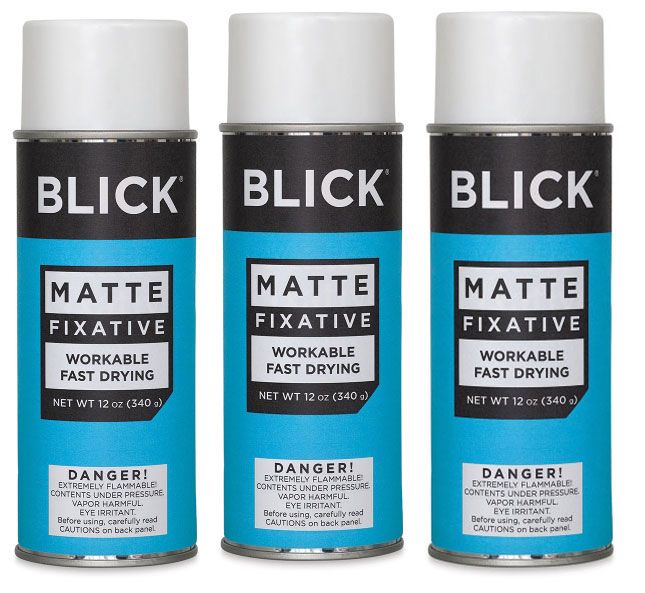
Workable Spray Fixative
This is a spray used to seal your work and to prevent information technology from smudging when you lot are finished. Workable means you can spray down an area and keep to draw on top of it. Withal, I don't recommend it for the techniques I share in my book. It volition change the smoothness of the newspaper and interrupt your blending.
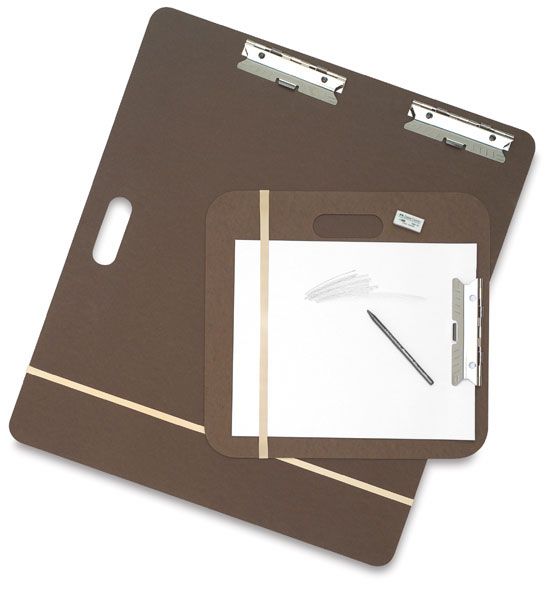
Drawing Lath
It'southward important to tilt your piece of work toward you lot as you draw. This prevents the distortion that occurs when working apartment. Secure your paper and reference photograph with a prune.
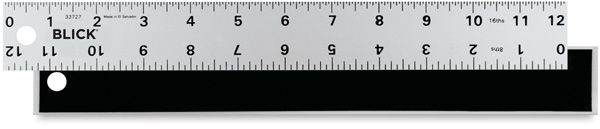
Ruler
Rulers help you measure and graph your drawings.
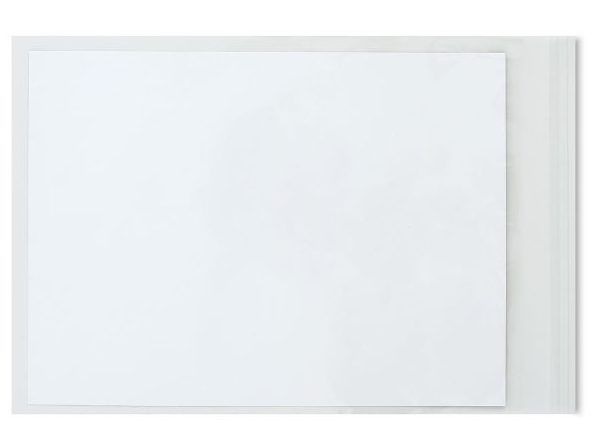
Acetate Report Covers
Utilise these covers for making graphed overlays to place on superlative of your photo references. They'll aid you accurately grid your drawings.
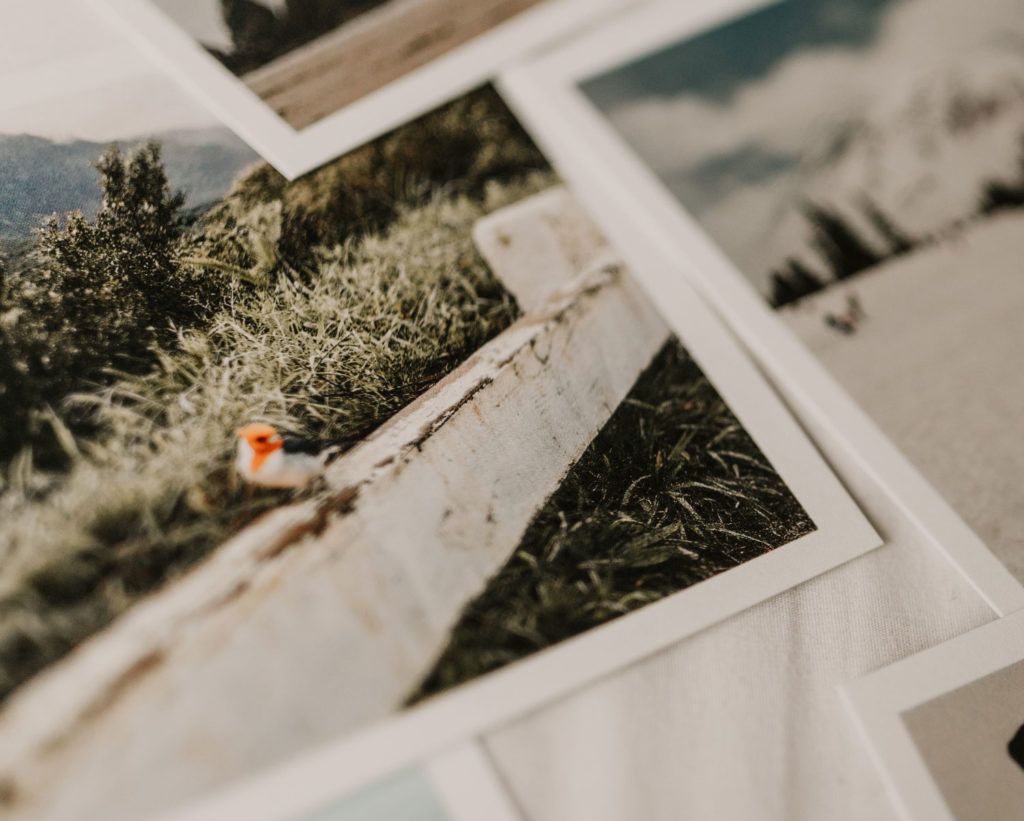
Reference Photos
These are valuable sources of practise fabric. Collect magazine pictures and categorize them into files for quick reference.
A word of warning: Don't copy the exact image; but utilise the images for practice. Many photographers hold the copyright for their piece of work, and whatsoever duplication without their limited permission is illegal. You can avoid this event altogether when you use your own reference photos.
Blending Graphite
Back in the 80s when I outset started instruction my Lee Hammond Blended Pencil Technique, graphite cartoon had a looser, more impressionistic approach. Smooth blending was rarely seen. Over the years, this shine and realistic arroyo has been embraced past thousands of people and become one of the virtually popular styles of drawing.
To create this look, blend your graphite until it appears smooth. It is not as easy as it looks, but with practice you lot tin can master this technique.
The following examples testify what your blending should and should not look similar. The smoothness of your blend will depend on how smoothly you apply the pencil.
Information technology's important to place your pencil lines downward slowly and evenly at the very beginning. If your pencil lines are put down in a fast, scribble-like application, no corporeality of blending will make them look shine.
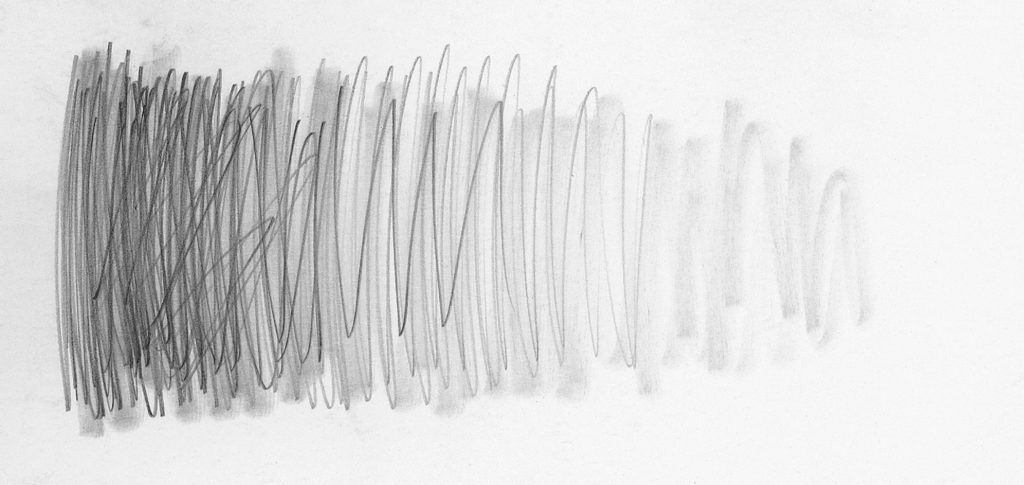
Don't Scribble
No amount of blending will e'er be able to brand this scribbled application look smoothen.
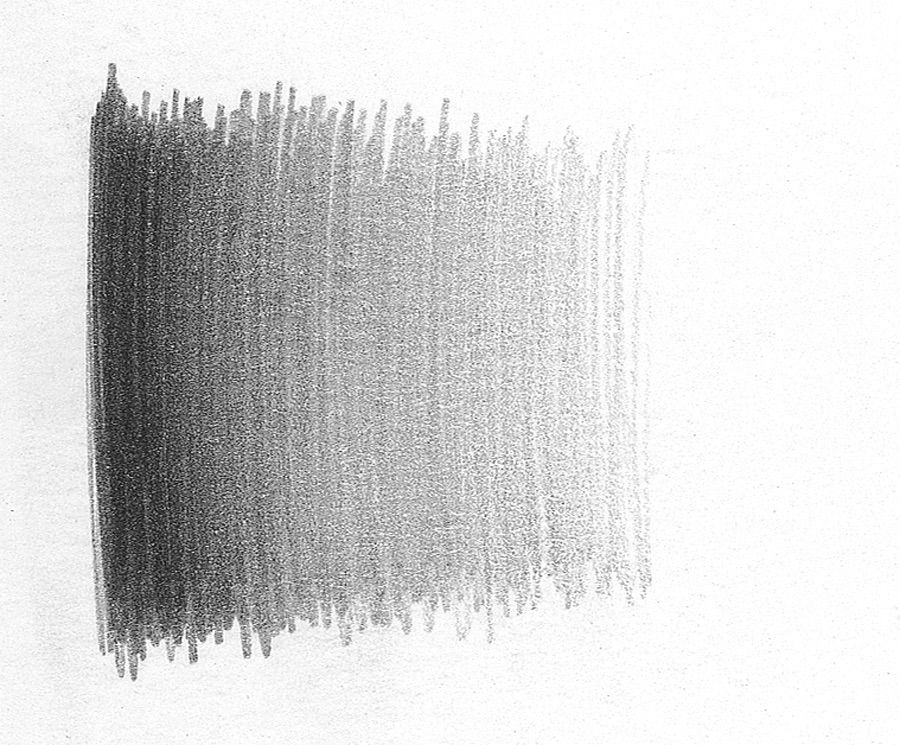
Smooth Lines from Night to Light
This is what your pencil lines should look like earlier you brainstorm blending. The individual lines are barely visible. Piece of work from dark to light, going upward and down and back and along at the same time to help the liens fill in as y'all go.
Use a Low-cal Touch for Blending
Apply the tortillion in the same up-and-downwardly, back-and-forth awarding as you practical your graphite pencil. Do not press downwards difficult equally you blend — this volition merely rough upwardly the paper and go far await choppy. The lighter your touch, the smoother your blend will be.
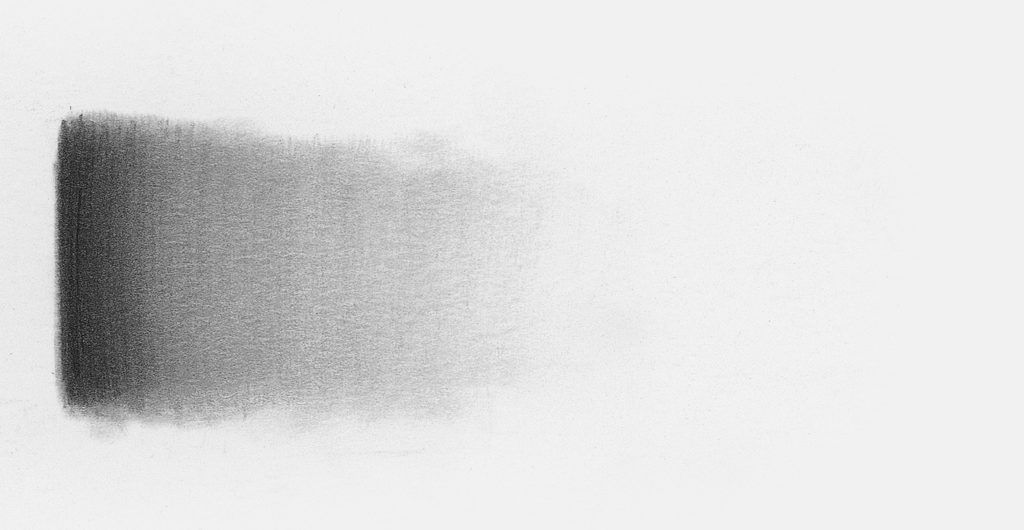
Pro tip : When blending, always concur your stump or tortillion at a slight angle to get the all-time results for a shine stop.
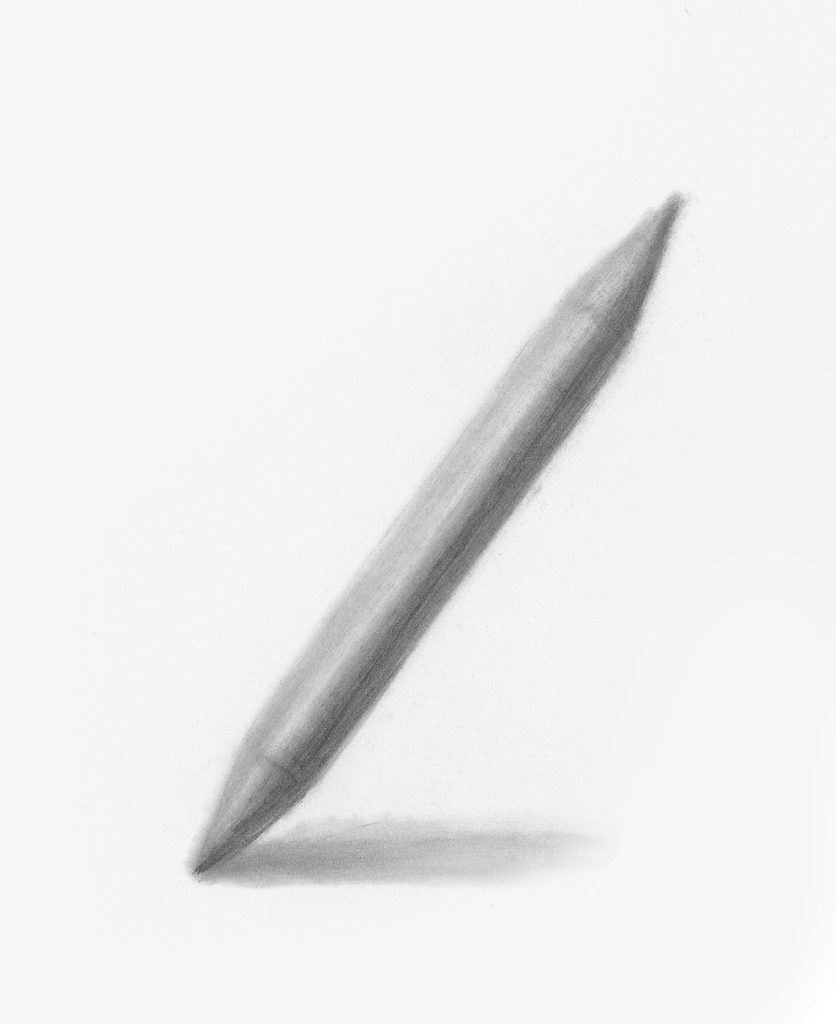
The v Elements of Shading
In lodge to draw realistically, y'all must first understand how lighting affects form. In that location are 5 elements of shading essential to depicting an object's class realistically.
Without a solid foundation of these elements, everything you describe will await apartment. Your discipline will expect three-dimensional only when the effects of light and shadow are properly placed. Each of the 5 elements of shading can be seen on the sphere below.
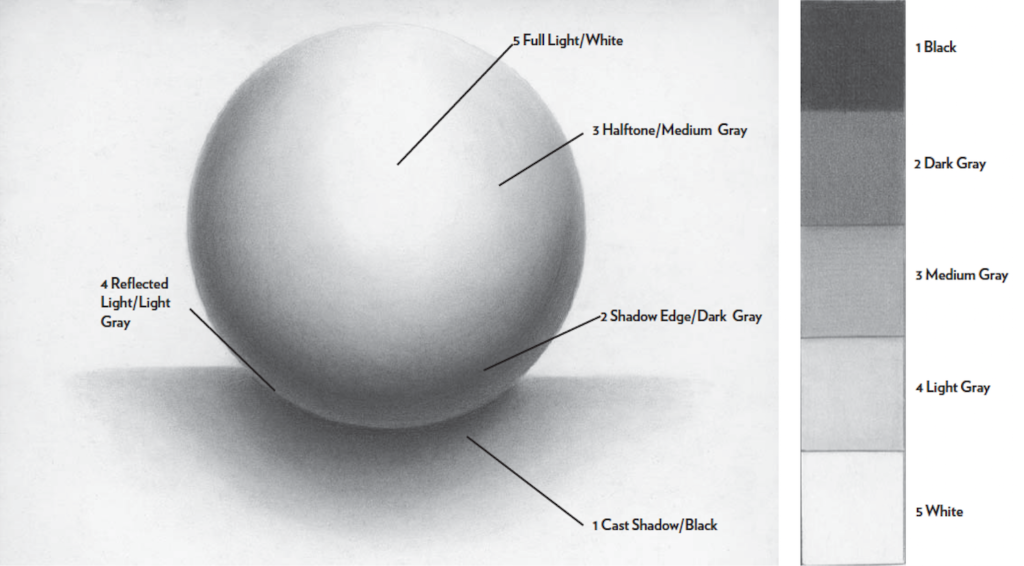
1.Bandage Shadow
This is the shadow the object you lot are drawing casts onto a surrounding surface. It is often the darkest part of your drawing because this is where the calorie-free is completely blocked. Information technology should exist drawn in equally close to blackness as possible. Equally it comes out from the object, it volition start to appear lighter. It is No. one on the value scale.
2. Shadow Edge
This is too referred to as a turning shadow. It is not the edge of the object, merely rather the shadow on the object that shows it's a rounded surface. This is a night grey tone that corresponds with No. 2 on the value scale. You will find this shadow where an object has protruded and the surface recedes to the other side.
3. Halftone
This is the true color of your object, unaffected past the low-cal. It has no shadow and is No. 3 on the value scale.
4. Reflected Light
Look at the sphere above, and y'all'll see a subtle rim of light along the border of the shadow side. This is the low-cal billowy upward from the surface and coming from behind. Information technology is the chemical element most oft left out of a drawing. Yet without it separating the shadow border and bandage shadow, your object will look flat.
Exist sure to study your reference for the reflected low-cal — information technology is always seen on the edges, rims or lip of an object. While it is lighter than the shadows, it is still seen on the darker side of the object. It should never exist left too white, or information technology will not await realistic. Information technology is a calorie-free gray and corresponds with No. 4 on the value scale.
5. Full Light
This is the role of your subject that receives the about low-cal. It's No. five on the value scale, where the tones fade gently into the white of the paper.
Let Lee show you how to turn a photo reference into a gorgeous graphite pencil drawing in this gratuitous video demonstration!
Matching Values
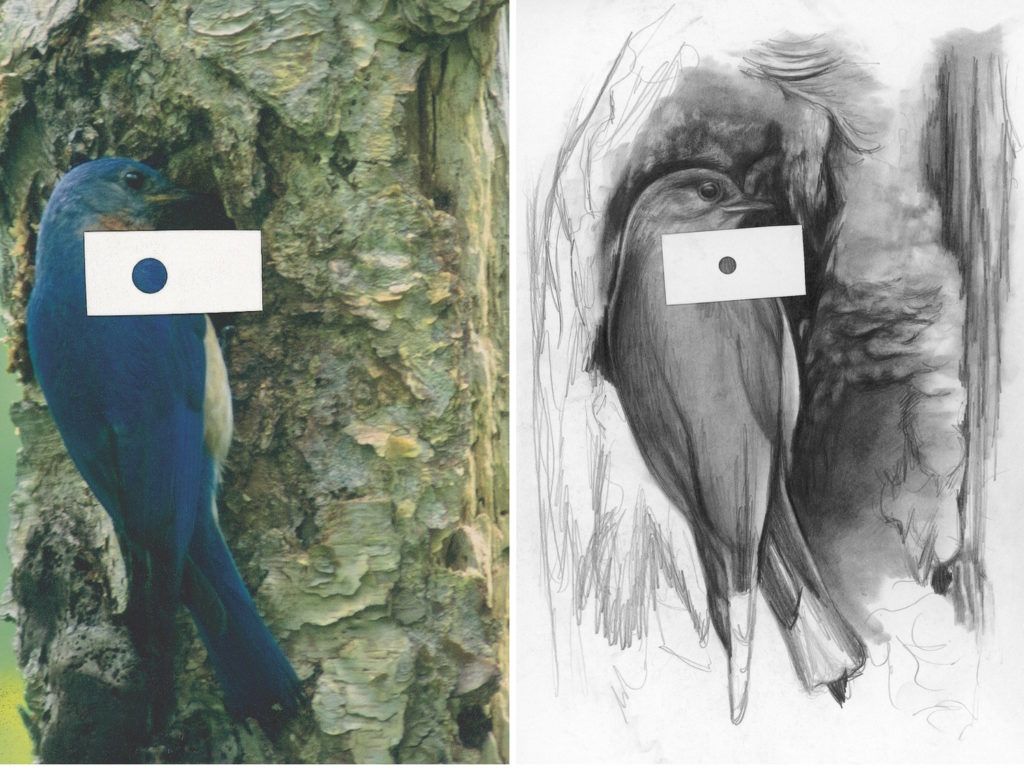
Information technology is important to match the values of your bailiwick affair. I e'er tell my students to analyze and replicate the tones. However, there are times information technology may exist difficult to judge the values in your reference photo and determine whether you are close.
To compare your tones, use this piffling trick: Take two small pieces of white paper and punch a pigsty in each. Place one over an surface area of your reference photo.
Place the other over the same expanse of your drawing. Look at both of the holes and see if the tones match. By isolating the tones within these holes, you tin can then compare them to white and see how dark they actually are.
Hither are some helpful tips for blending, shading and achieving even tones:
- Dissimilarity. Don't exist afraid to become dark in the shadows. Contrast is very important for creating the look of realism.
- Application of Tone. E'er employ your pencil lines according to the contours of your subject. Blend using long vertical strokes, lightening your touch as you get into the light (similar a value scale). You cannot control the fade into the light with cross-blending.
- Edges. Someday you have to use a line to describe the shape of something, y'all must get rid of the expect of outlining. The darkness of a fatigued line belongs to one surface or some other. Fade the dark out into the surface information technology belongs to and create the wait of an edge, not an outline.
- Uneven Tones. Right uneven tones with a kneaded eraser. Form the eraser into a indicate and gently "depict" the irregularity out. Use a very lite impact. This is called "drawing in reverse." You can likewise crisp upward edges this way.
Backgrounds and Edges
Graphite is a foundation medium. The gray tones information technology produces provide y'all a means for fully exploring and understanding the importance of value and the v elements of shading nosotros take touched on earlier.
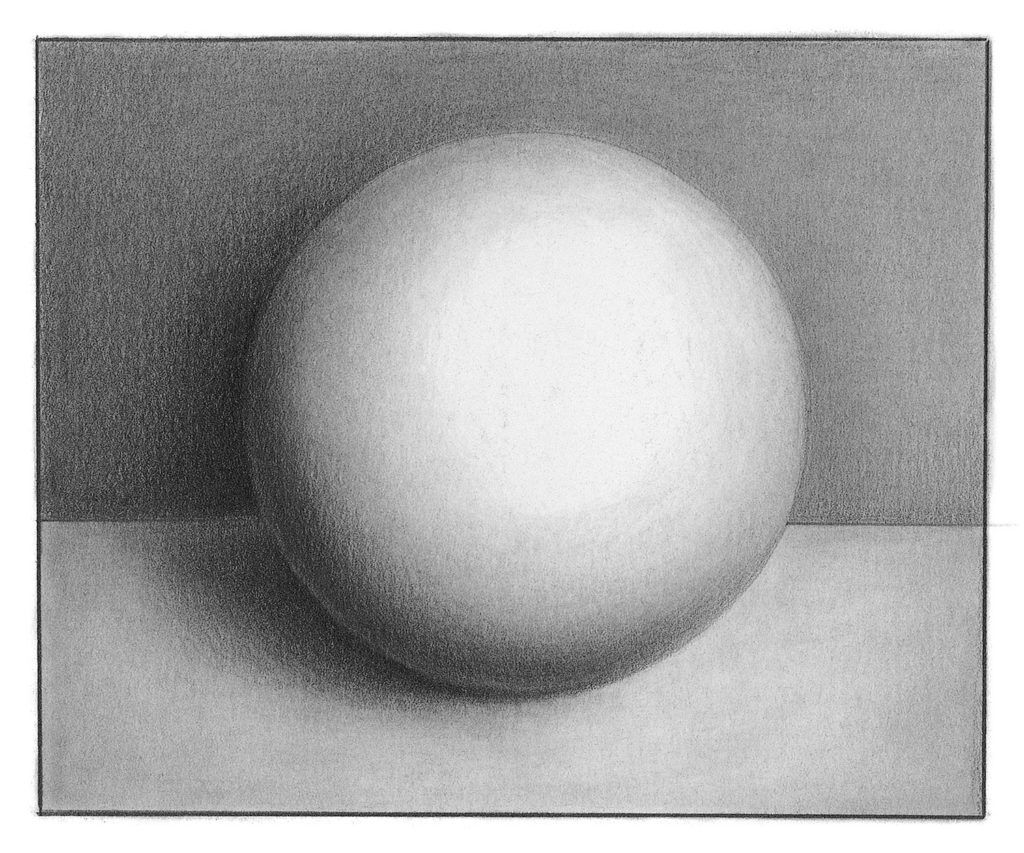
Ane way you lot can use value to achieve a better sense of depth in your drawings is to add together tone to the groundwork. Discover below how the dark backgrounds affect the look of the shapes. If these shapes were set against white backgrounds, their edges would expect much different.
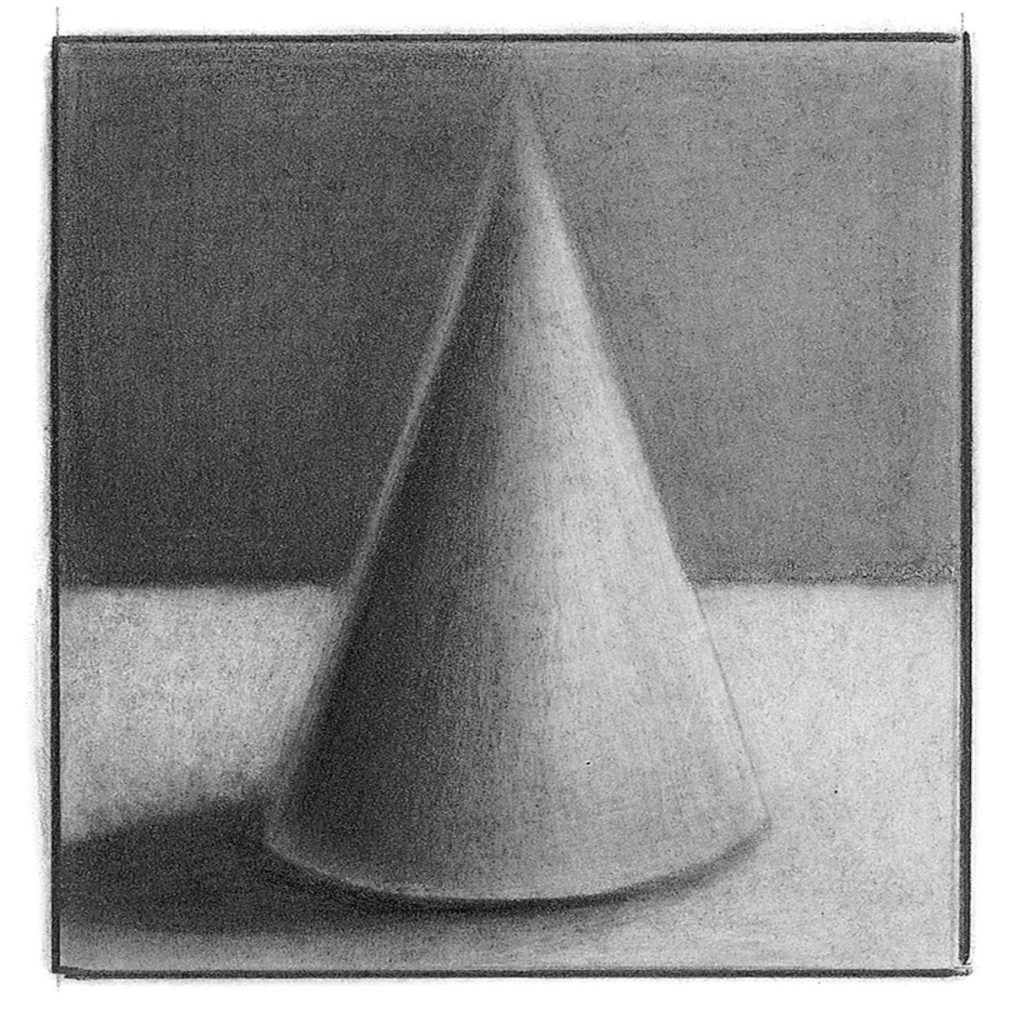
When it comes to drawing shapes, there are two distinct types of edges: hard and soft. Hard edges are establish where 2 surfaces come together or overlap. They are quite divers as their tones create the look of an edge by stopping abruptly. Soft edges tin can be plant in areas when an object bends gently. They have a gradual change in tone.
Background Makes a Difference
When the sphere is placed in front of a toned background, its edges look different compared to the previous sphere with the white background. When cartoon, always ask yourself if you are blending lite over nighttime or night over light.
Hard and Soft Edges
This cone has two distinct types of edges: hard and soft. The soft edge can be found in the curve of the shadow on the rounded surface of the cone. Difficult edges are created were the cone overlaps the background and touches the tabular array.
Proceed Learning
At present that you have the basics of graphite pencil covered, start practicing! Lee Hammond's All New Big Book of Drawing is a culmination of the artist'south 40 years of didactics, featuring more than the lxxx step-by-step projects and tips for both drawing with graphite pencil and colored pencil. Onward, artists!

Source: https://www.artistsnetwork.com/art-techniques/beginner-artist/graphite-pencil-drawing-basics/
Posted by: gonzalezwhoustinity.blogspot.com
0 Response to "How To Come Up With A Background For A Drawing"
Post a Comment